
studies & articles
The Blog
One of the many pleasures of being a professor was feeling the need to stay on top of the research in psychology. When I first learned about the half-life of knowledge, the literature typically said it was 3-5 years in technical fields. As a retired professor, I am still a member of the American Psychological Association and subscribe to a service that delivers abstracts and open-source articles from a large number of journals. As an alumna of Harvard, I also get information from them and I have the time to peruse multiple sources. This is a pleasure most professionals don’t have, especially if they value
work-life balance.
I still love research and, when I was asked to write the blog, I enthusiastically agreed. I try to select articles based on their relevance to practitioners, but also to capture both emerging themes and important corrections. I am hopeful that, moving forward, we will have ways to enable readers to easily engage in conversations with me and each other.
-Dr. Karen Nelson

Borderline Personality Disorder and relationships
Today, we look at three studies of relationships in people with Borderline Personality Disorder. First, van Schie, Matthews, Marceau, Römer & Grenyer (2024) published “Affective and Neural Mechanisms of How Identity Dysfunction in Borderline Personality Disorder May Interfere with Building Positive Relationships” in Personality Disorders: Theory, Research, and Treatment.
Here are some excerpts (the full text is available):
Individuals with borderline personality disorder (BPD) often hold pervasive and negative self-views and experience feelings of low connectedness toward others despite effective treatment.

Teachers can help
Today, I present four studies emphasizing the roles teachers play in student success. First, McLean, Janssen, Espinoza, Lindstrom Johnson & Jimenez (2023) published “Associations between Teacher and Student mathematics, Science, and Literacy Anxiety in Fourth Grade” in Journal of Educational Psychology. Here are edited excerpts:
The present study explored associations among teachers’ anxiety for teaching mathematics, science, and English language arts and their students’ own anxiety in each content area, and how these associations varied depending on student sex and socioeconomic status (SES).

Are child and adolescent students more uncivil after COVID-19?
Today, I’m presenting two articles that I think are ultimately related. First, Spadafora, Al-Jbouri, & Volk (2024) published “Are Child and Adolescent Students More Uncivil After COVID-19?” in School Psychology. Here are the edited abstract and impact statements:
The goal of the current work was to understand how the COVID-19 pandemic school shutdowns may have impacted classroom incivility in children and adolescents.

Studies of rural communities
This will be a long post for those of who deal with rural populations. Full disclosure – I grew up on a farm and live in a quite rural area. We will touch on a range of issues. First, Kirkby & Papps (2024) published “Correlates of Mental Health Help-Seeking Attitudes among Farming and Nonfarming Rural Women” in Journal of Rural Mental Health. Here are the edited abstract and impact statements:

Problems in adolescence
Today, I’m looking at four articles addressing problems in adolescence. First, Kaiser et al. (2023) published “Neurocognitive Risk Phenotyping to Predict Mood Symptoms in Adolescence” in Journal of Psychopathology and Clinical Science. Here are the edited abstract and impact statement:
Predicting mood disorders in adolescence is a challenge that motivates research to identify neurocognitive predictors of symptom expression and clinical profiles.

Adjudicated clients
Today, I look at several articles dealing with people involved in the legal system. First, van der Ploeg, Rameckers & van Emmerik (2024) published “The Efficacy of Psychological Interventions for Posttraumatic Stress Disorder Symptoms in Incarcerated Forensic Populations: A meta-analysis of randomized controlled trials” in Psychological Trauma: Theory, Research, Practice, and Policy. Here are the edited abstract and impact statement:
Given the high prevalence of posttraumatic stress disorder (PTSD) symptoms in incarcerated forensic populations,

Attachment in adolescence
Last time, we looked at attachment in children. Today we turn to adolescents. First, Xia, Coffey & Fosco (2024) published “Daily Dynamics of Feeling Loved by Parents and Their Prospective Implications for Adolescent Flourishing” in Developmental Science. Here’s the edited abstract:
Feeling loved by one's caregiver is essential for individual flourishing (i.e., high levels of psychological well-being in multiple dimensions). Although similar constructs are found to benefit adolescent well-being, research that directly tests parental love as a feeling from the recipient's perspective is rare.

Attachment in childhood
Today and next time, I am presenting a series of articles on attachment, all published in Developmental Science. First, Misch, Kramer & Paulus (2024) published “The Relationship between Attachment Representations and Minimal Intergroup Bias in Preschool-Aged Children in Developmental Science. Here are edited excerpts:
Attachment theory proposes that young children's experience with their caregivers has a tremendous influence on how children navigate their social relationships

Moral injury
It’s been awhile since I posted about moral injury. From the What Is Moral Injury website: “Moral injury is the damage done to one’s conscience or moral compass when that person perpetrates, witnesses, or fails to prevent acts that transgress one’s own moral beliefs, values, or ethical codes of conduct.“ Here, we look at two articles related to posttraumatic stress. First, Mojallal, Simons, Simons & Swaminath (2024) published “Betrayal Trauma, Mindfulness, and Emotional Dysregulation: Associations with moral injury and posttraumatic stress disorder” in Traumatology. Here’s the edited abstract:

New Approaches to Youth Substance Misuse
This post follows the last. Abrams (2024) published “New Approaches to Youth Substance Misuse” in APA Monitor.
For years, students in middle and high schools across the country were urged to “just say no” to drugs and alcohol. But it’s no secret that the Drug Abuse Resistance Education (D.A.R.E.) program, which was typically delivered by police officers who urged total abstinence, didn’t work. A meta-analysis found the program largely ineffective and one study even showed that kids who completed D.A.R.E. were more likely than their peers to take drugs.

Research on substance use
This post and the next deal with substance use and abuse. Today we look at correlates. First, Clinchard et al. (2024) published “Family Socioeconomic Status and Adolescent Substance Use: The role of parent–adolescent brain similarity and parental monitoring” in Journal of Family Psychology. Here’s the edited abstract:

PTSD, public stigma, spirituality, chronic illness, lucid dreaming
Today, we look at three very different studies of PTSD, each addressing progress after a diagnosis. First, Weinberg, Soffer & Gilbar (2023) published “PTSD and Public Stigma: Examining the relationship between public stigmas attached to PTSD and self-esteem, spirituality, and well-being” in Psychological Trauma: Theory, Research, Practice, and Policy. Here are the edited abstract and impact statements:

Effects of social class in college
Today, I present two articles related to working class students. First, Claes, Smeding, Carré & Sommet (2024) published “The Social Class Test Gap: A worldwide investigation of the role of academic anxiety and income inequality in standardized test score disparities” in Journal of Educational Psychology. Here are the edited abstract and impact statements:
We conducted three preregistered studies using the Organization for Economic Co-operation and Development Programme for International Student Assessment (PISA) data to provide a worldwide estimation of the standardized test gap between students from lower and higher social classes.

Information gathering in autism and alexithymia
This is a long post regarding an article I found intriguing. Lee, Long, Catmur, Hauser & Bird (2024) published “Information Gathering: Dissociable effects of autistic and alexithymic traits in youths aged 6–25 years” in Emotion. Here are highly edited excerpts:
Autistic youths tend to react negatively to uncertain events. Little is known about the cognitive processes associated with this intolerance of uncertainty, most notably the tendency to actively gather information to minimize uncertainty.

Antagonistic and the “better-than-average-effect”
Today, I examine an article I found intriguing. Hart, Hall, Lambert, Cease & Wahlers (2024) published “Antagonistic but Holier than Thou: Antagonistic people think they are (way) better-than-average on moral character” in Personality Disorders: Theory, Research, and Treatment. Here’s the edited abstract:
Although clinical psychologists have long speculated that antagonistic individuals may lack insight into their moral deficits, some evidence has shown that more (vs. less) antagonistic people view moral traits as somewhat desirable and rate themselves as lower on moral characteristics (suggestive of some insight).

More on the alternative model
I have written before about the Alternative Model of Personality Disorders (AMPD). Today, I present three more studies. First, Hines et al. (2024) published “Different Routes to the Same Destination? Comparing Diagnostic and Statistical Manual of Mental Disorders, fifth edition Section II- and alternative model of personality disorder-defined borderline personality disorder” in Personality Disorders: Theory, Research, and Treatment. Here’s the edited abstract:
Borderline personality disorder (BPD) is defined by the presence of at least five of nine symptoms in Section II of the Diagnostic and Statistical Manual of Mental Disorders, fifth edition.
Parenting and culture
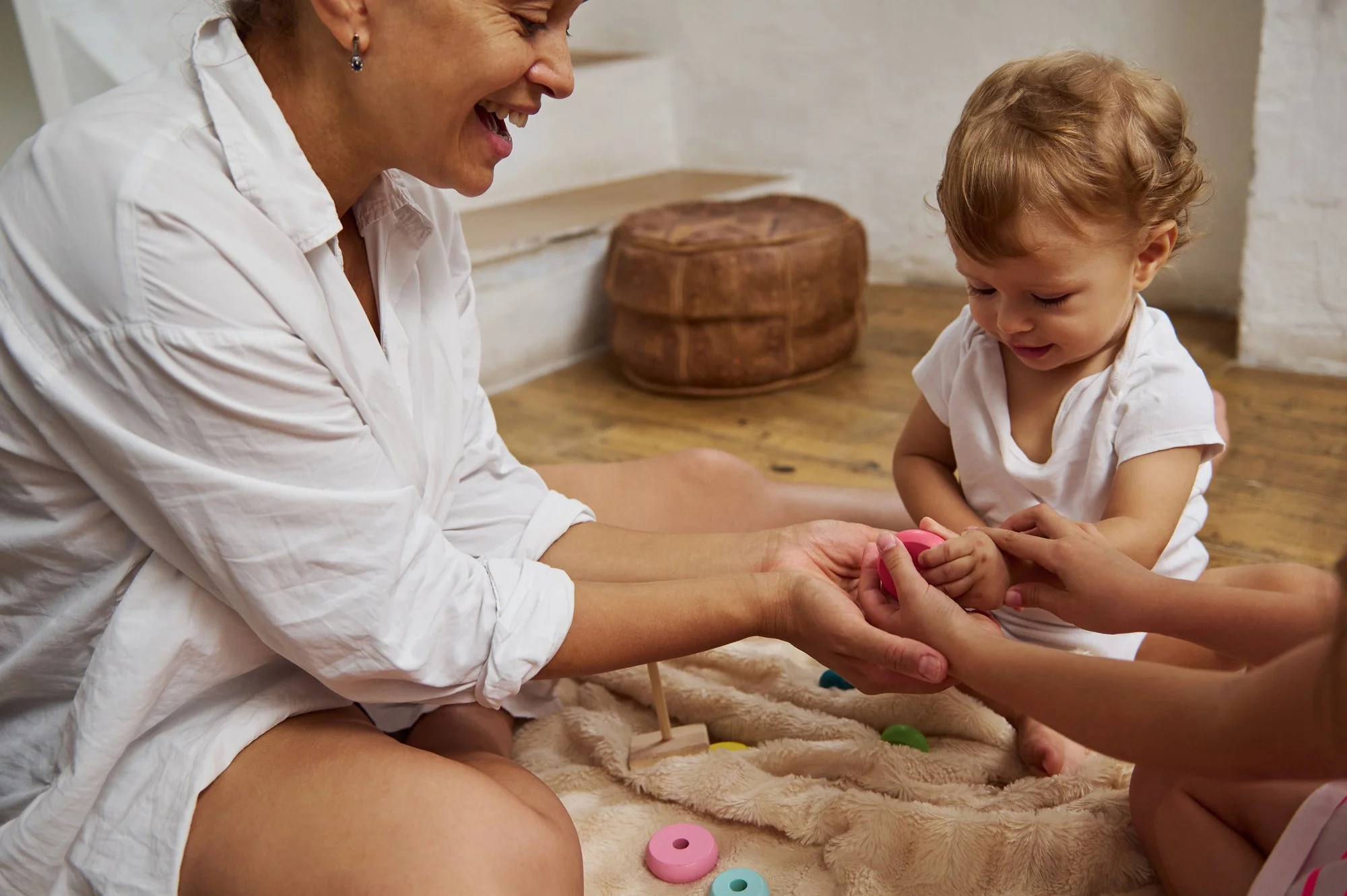
As the US becomes much more culturally diverse, professionals encounter a wider range of parenting styles and experiences. Today, we look at two articles that examine parenting from broader cultural perspectives. First, Bradshaw et al. (2024) published “Disentangling Autonomy-Supportive and psychologically controlling parenting: A meta-analysis of self-determination theory’s dual process model across cultures” in American Psychologist. Here are the edited abstract and impact statements:
Self-determination theory’s (SDT) dual process model claims that parental autonomy support relates positively to child well-being, while psychologically controlling parenting is linked positively to child ill-being.

Parent and sibling roles in adolescent anger
Today, we look at two articles related to teen behavior. First, Arbel (2024) published “Daily Profiles of Parents’ Supportive Extrinsic Emotion Regulation of Adolescents’ Negative Emotion” in Emotion. Here’s the edited abstract:
Parental support for adolescent emotion regulation is critical for adolescents’ health. Yet, little is known about parents’ daily support of adolescents’ emotion regulation. This study aimed to typify daily co-parent supportive extrinsic emotion regulation (EER) profiles directed toward adolescents’ daily distress and anger.

School relationships
Today, I look at what happens at school. First, Fu, Paskewich, Randolph, Bradshaw & Waasdorp (2024) published “Parent Perceptions of School Relationships: Considerations of racial–ethnic differences and youth’s peer victimization.” Journal of Family Psychology. Here’s the edited abstract:
Literature has highlighted that social relationships at school are essential to school success, yet few studies have examined this construct from parents’ perspectives. Even less research has explored perceptions of social relationships in the school among parents whose children are bullying victims and potential racial–ethnic differences in the perceptions.

Research on emotion regulation
Today, I present three articles addressing different aspects of emotion regulation. First, Ricker, Sanchez, Cooley, Barnett & Gunder (2024) published “Interactive Effects of Parental Support and Psychological Control on Children’s Emotion Regulation” in Journal of Family Psychology. Here’s the edited abstract:
Parents engage in a variety of behaviors that have important impacts on children’s psychosocial functioning, including their ability to effectively regulate emotions. Parental support includes behaviors that convey warmth, love, and acceptance, whereas parental psychological control includes shaming, guilt induction, and love withdrawal.